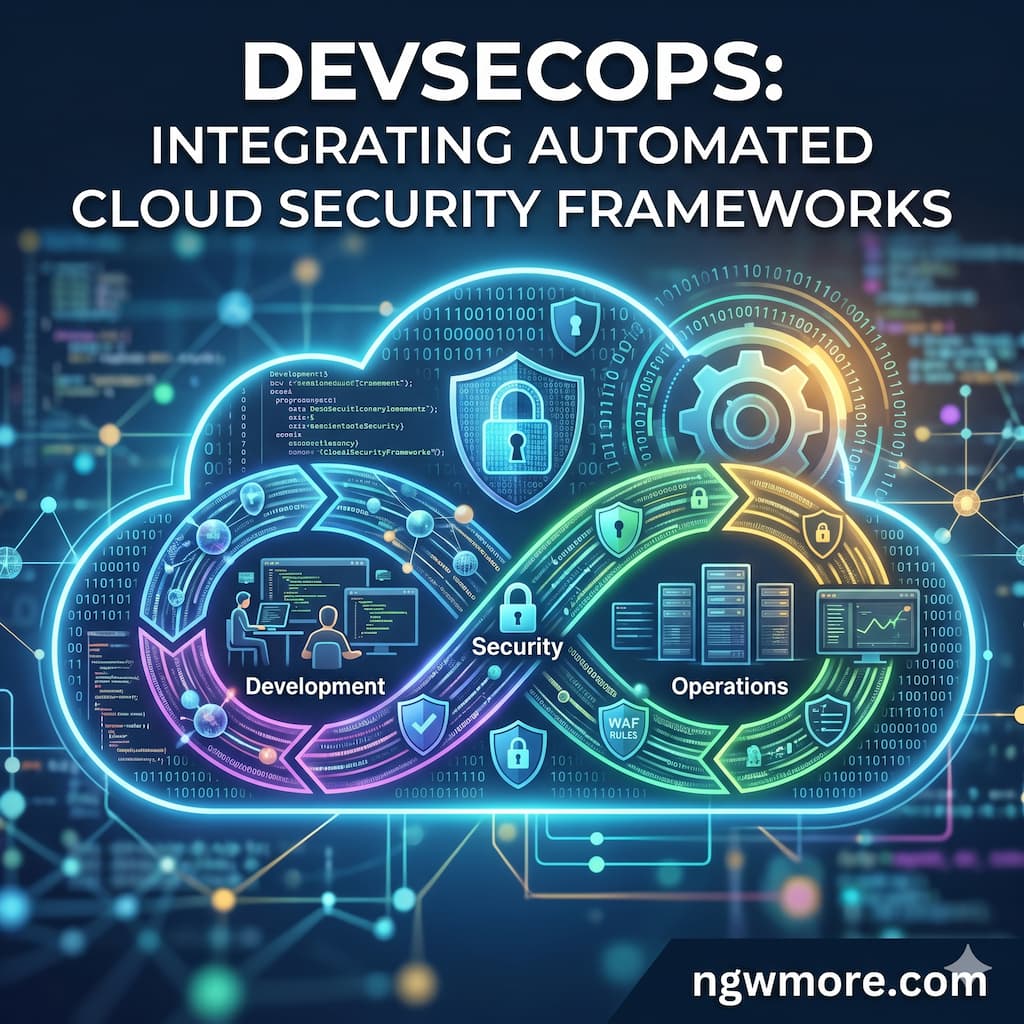
DevSecOps: Integrating Automated Cloud Security Frameworks
The structural engineering blueprints governing global enterprise application delivery are experiencing a profound, data-driven transformation. For decades, software development lifecycle (SDLC) architectures operated within a linear, deterministic paradigm. Engineering departments built application code in isolated feature sprints, systems administrators provisioned underlying virtual machines using static runtime scripts, and security compliance teams performed retrospective vulnerability assessments on monthly or quarterly cadences.
While this fragmented, human-centric deployment topology provided baseline operational control during earlier eras of static on-premises hosting, it introducing severe systemic vulnerabilities inside today’s hyper-connected, high-velocity cloud-native ecosystem.
Modern enterprise networks process massive data velocity, handle heavily distributed microservices architectures, and execute automated deployment runs multiple times a day across complex hybrid and multi-cloud environments.
Relying on legacy manual validation gates under this high-velocity paradigm introduces critical operational bottlenecks. Security evaluations become a trailing roadblock, forcing development pipelines to stall, creating extensive deployment latencies, and leaving production environments blind to active configuration drift. This friction leaves the corporate attack surface exposed to malicious zero-day exploits, supply chain injections, data leakage, and catastrophic compliance failures that destroy organizational capital and user trust.
To permanently break past these performance ceilings, lower operational security overhead, and secure an absolute competitive moat, forward-thinking technology and infrastructure leaders are overhauling their deployment perimeters. They are migrating away from reactive ad-hoc triage cycles and embedding automated, continuous layers known as DevSecOps Cloud Security Frameworks directly into the delivery core.
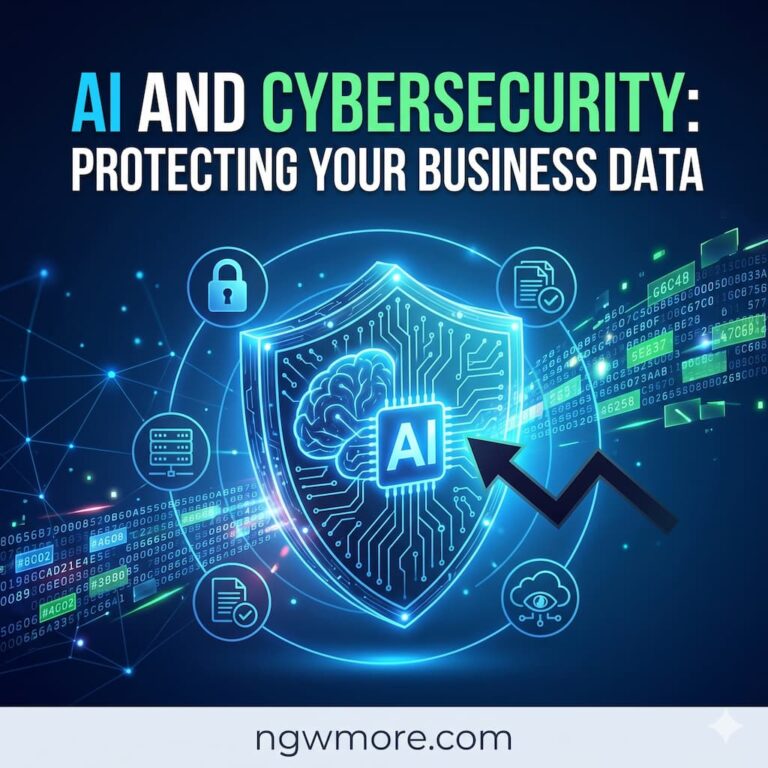
Far from a superficial code scanner or a basic dashboard plug-in, a production-grade DevSecOps architecture unifies automated static and dynamic software testing pipelines, continuous infrastructure-as-code validation engines, real-time runtime protection layers, and hardware-insulated zero-trust data matrices straight into the core corporate computing infrastructure.
1. The Core Paradigm Shift: Shifting Security Absolutes to the Left
To build an unassailable cloud delivery engine capable of scaling safely across thousands of distributed application instances, Chief Information Officers (CIOs) and enterprise technology architects must transition their underlying system design philosophy away from trailing perimeter defense and focus on continuous, programmatic verification.
- Legacy Parameter Defense Models: Rely on a reactive topology. Systems record and evaluate code and configuration vectors after they are already committed to production, attempting to isolate security anomalies via external firewalls, retrospective logs, and manual emergency hotfixes.
- The Hardened DevSecOps Core: Reconfigures this deployment topology entirely. The framework implements a “Shift-Left” Security Philosophy. Security validation is programmatically embedded straight into every step of the developer’s native workspace—from initial local code commits, automated pipeline compilation matrices, and container assembly runs, all the way through to active cloud runtime orchestration.
By establishing an uninterrupted, automated feedback loop between live code development and active cloud security guardrails, DevSecOps pipelines permanently eliminate validation lag. The deployment process moves past its historical role as an uncoordinated risk factor. The software framework evolves into an active, strategic quality shield designed to identify and eliminate security exposures weeks before a release container is formally authorized for production deployment, maximizing systemic throughput at peak efficiency.
2. Core Pillars of an Automated DevSecOps Infrastructure Stack
Constructing a production-grade DevSecOps security infrastructure capable of scaling safely across thousands of multi-jurisdictional code repositories requires an integrated, secure technology layer built on four foundational engineering pillars.
[Code Commit] ──> SAST/SCA Scan ──> IaC Compliance Check ──> Enclave Image Sign ──> Secure Runtime (RASP)
Pillar I: High-Throughput Automated Code Scanners (SAST & SCA)
The initial defense layer of any comprehensive DevSecOps protocol depends on the rapid, consistent execution of automated scanning engines designed to identify structural code defects and vulnerable dependencies early in the development loop.
- The Engineering Blueprint: Security engineers integrate advanced Static Application Security Testing (SAST) and Software Composition Analysis (SCA) tools straight into the corporate version control system and CI/CD pipelines. As software engineers push new feature code, the SAST engine parses raw syntax trees, builds comprehensive control flow graphs, and automatically flags foundational vulnerabilities—such as SQL injections, cross-site scripting (XSS) exposures, hardcoded cryptographic credentials, and buffer overflows. Concurrently, the SCA matrix maps the application’s complete dependency tree against international vulnerability indexes, identifying out-of-date or malicious open-source code libraries and enforcing automated build blocks if high-severity flaws are discovered.
Pillar II: Programmatic Infrastructure-as-Code (IaC) Security Governance
Modern cloud architectures utilize software declaration scripts (such as Terraform, OpenTofu, CloudFormation, or Ansible) to provision and scale massive virtual networks, container clusters, and database lakehouses automatically. Minor configuration errors within these files introduce extreme security exposures.
- The Engineering Blueprint: Systems architects deploy automated IaC Compliance Scanners (such as Checkov, tfsec, or KICS) straight into the delivery pipeline. These engines evaluate infrastructure blueprints against rigid corporate policy-as-code definitions (such as OPA Rego policies). The system checks configuration files programmatically to ensure that cloud object stores are encrypted at rest, virtual private clouds (VPCs) block unauthorized public routing paths, and container configurations restrict root privilege escalation patterns. If an infrastructure file violates an established security parameter, the pipeline automatically fails the deployment, stopping dangerous cloud configurations before they are built in a physical data center.
Pillar III: Cryptographic Artifact Signing and Supply Chain Provenance
Securing the development and staging loops is irrelevant if an organization’s central deployment container registry can be hijacked by external threat groups to substitute verified production images with compromised, malicious payloads.
- The Scale Blueprint: Engineering groups deploy Cryptographic Native Supply Chain Protections utilizing signing utilities (such as Cosign and Sigstore). When a container image successfully clears all automated SAST, SCA, and unit-testing gates within the secure pipeline, the build agent automatically signs the image artifact using a temporary, cryptographically verified signing key. When the container orchestration engine (such as Kubernetes) attempts to scale up or update a live software application node, an active Admission Controller intercepts the request. The controller validates the container’s cryptographic signature and software bill of materials (SBOM) provenance against whitelisted verification thresholds, blocking unsigned or unverified images from executing within the infrastructure perimeter.
Pillar IV: Continuous Cloud Security Posture Management (CSPM) and Active Runtime Protection
Even within highly validated deployment lifecycles, applications operating in live cloud environments remain continuously exposed to changing network dynamics, newly discovered zero-day exploits, and manual configuration alterations—a phenomenon known as Configuration Drift.
- The Scale Blueprint: Infrastructure administrators implement an integrated Cloud Security Posture Management (CSPM) engine paired with Runtime Application Self-Protection (RASP) agents. The CSPM engine continuously scans active multi-cloud environments, comparing current configurations against target security baselines and automatically remediating unauthorized changes. Simultaneously, RASP agents embed straight within the application runtime execution layer. These agents monitor memory allocations, system calls, and network execution parameters in real-time. If an active exploit attempt targets an unpatched software vulnerability, the agent flags the anomaly, blocks the specific malicious system call instantly, and triggers isolated remediation routines without disrupting global customer uptime.
3. High-Performance Optimization: The DevSecOps Metric Ledger
Upgrading an enterprise release architecture from legacy manual verification gates to an automated, multi-tier DevSecOps framework completely redefines an organization’s defensive efficiency and network optimization benchmarks.
| Performance Parameter | Legacy Security Management | Automated DevSecOps Infrastructure |
| Vulnerability Discovery Latency | Weeks or months; trailing manual audit cadences | Real-time; instant sub-second code compilation gates |
| Infrastructure Compliance Validation | Manual, human-centric post-provisioning reviews | Programmatic; automated Policy-as-Code pipeline checks |
| Supply Chain Provenance Verification | Vulnerable; unverified images allowed in registries | Ironclad; strict cryptographic artifact signing and validation |
| Mean Time to Remediation (MTTR) | Days or weeks; requires manual hotfix engineering | Minutes; automated pipeline patches and rollbacks |
| Production Configuration Drift | High exposure; unmonitored human manual changes | Continuous protection; automated CSPM monitoring & fix loops |
4. Real-World Applications: DevSecOps Frameworks in Active Production
Evaluating how advanced DevSecOps platforms and automated security frameworks perform under complex, real-world enterprise deployment conditions highlights their critical role in maximizing operational velocity and safeguarding core data systems.
Preempting Remote Code Execution and Dependency Hacks in Financial Tech Pipelines
Consider a major multinational financial services corporation that coordinates automated banking applications and digital checkout APIs serving millions of global consumers daily. The underlying microservices architecture handles highly sensitive transaction details and operates under rigid compliance directives. During an urgent development sprint to patch a customer-facing portal, an outsourced development group accidentally imports an open-source logging dependency containing an unpatched Remote Code Execution (RCE) vulnerability—similar to historic logging library exploits.
If this application container were pushed straight to production using traditional, slow-moving validation protocols, the vulnerability would remain completely unmonitored. Malicious threat groups would scan the public endpoint, exploit the dependency flaw to gain administrative control over the application runtime, and begin harvesting transaction logs or pivoting laterally across internal database networks.
The enterprise completely neutralizes this systemic risk by anchoring its delivery loop to a continuous DevSecOps pipeline. The moment the development team initiates a pull request to merge the new code, the automated SCA engine scans the software assembly. The system identifies the vulnerable dependency string, flags the RCE exploit parameter against live threat catalogs, and fails the pipeline execution run within seconds.
The system blocks the image build from finalizing, prevents deployment to the container registry, and returns a detailed remediation manifest directly to the developers’ workspace.
This immediate intervention allows the engineering team to swap the compromised library for a secure, updated version long before a single byte of vulnerable code touches public cloud infrastructure, protecting user assets from exploitation.
Eliminating Infrastructure Configuration Drift in Scale-Up Cloud Fabrics
A hyper-scale digital enterprise distribution engine operates thousands of automated container clusters and dynamic data storage arrays across multi-tenant public cloud environments to serve business consumers globally. To maintain maximum performance during flash-traffic events, the organization utilizes software-defined infrastructure-as-code configurations to dynamically provision new compute environments. During an off-hours system restoration event, a junior network operator manually opens an infrastructure port access rule to perform remote diagnostic testing on a database node, accidentally leaving the connection exposed to the open internet.
The enterprise stabilizes its network perimeter and eliminates configuration drift by anchoring its infrastructure to an automated CSPM and policy-as-code management layer. The CSPM engine monitors active multi-cloud environments continuously, comparing live network configurations against baseline infrastructure definitions.
Within minutes of the manual change, the monitoring engine identifies the unauthorized port opening as a high-severity drift violation.
The platform executes an automated remediation playbook: it tears down the insecure access path programmatically, resets the firewall configuration back to the approved policy-as-code blueprint, and alerts the centralized security operations center automatically. This real-time defense prevents scanning bots from discovering the exposed asset, ensuring complete data security and maintaining unassailable network visibility.
5. Security Architecture for Hardened DevSecOps Automation Planes
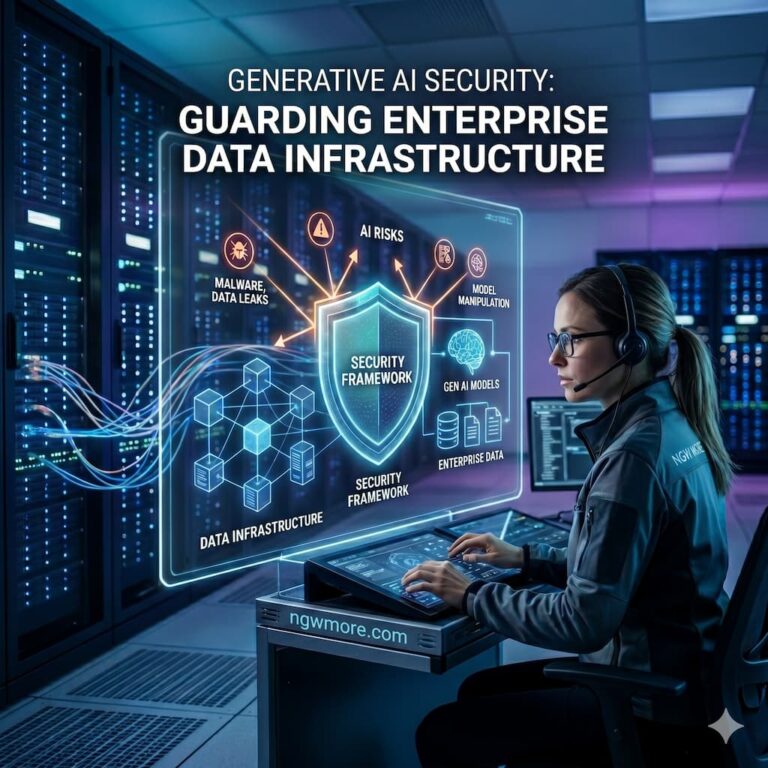
Centralizing automated source code repositories, integrating live cloud-native infrastructure pipelines, tracking vulnerability metrics, and automating API-driven deployment mechanisms introduces intense system security requirements. Because a DevSecOps platform handles an organization’s core intellectual property and possesses the administrative credentials required to provision high-value cloud environments, the pipeline automation framework represents a high-priority target for advanced persistent threat networks, software supply chain syndicates, and corporate espionage operations.
Implementing Anonymized Secret Tokenization across Delivery Pipelines
To execute comprehensive testing, compile code blocks, and deploy infrastructure elements safely without exposing sensitive database passwords, cloud API access tokens, or private cryptographic keys within raw source repositories or plain-text environment logs, organizations must implement a robust data perimeter.
Systems architects deploy centralized, hardware-backed Secret Management Engines (such as HashiCorp Vault or specialized cloud key stores) linked directly to the pipeline. Developers never write plain-text credentials into application code configurations.
Instead, the framework utilizes automated tokenization layers that inject short-lived, encrypted dynamic access tokens directly into container memory spaces at the exact millisecond of execution.
The keys are automatically rotated, cryptographically masked across all pipeline output logs, and instantly revoked once a deployment run concludes, keeping sensitive corporate keys insulated from unauthorized lateral access, internal insider threats, or data exploitation at all times.
Hardening the Pipeline Core via Zero-Trust Isolation and Confidential Enclaves
Because the central integration engine commands the absolute authority to analyze code vulnerabilities, sign deployment artifacts, and orchestrate cloud infrastructure scaling models, accessing this core automation framework requires extreme security constraints.
Isolate the entire CI/CD pipeline server structure, orchestration controllers, and build agent nodes inside a strict Zero-Trust Network Access (ZTNA) envelope. Every developer account, administrative terminal, and internal software integration must clear continuous multi-factor authentication, rigorous behavioral risk screening, and endpoint device posture assessments before gaining access to the automation console.
Furthermore, critical compilation steps, artifact signing tasks, and policy-as-code evaluation engines must execute exclusively within hardware-isolated Confidential Computing Enclaves equipped with hardware-level memory encryption. This isolation keeps your underlying proprietary source code blueprints, compilation logs, and cryptographic keys completely insulated from host-level interception or external tampering exploits throughout the execution lifecycle.
6. Regulatory Convergence: Adhering to International Cloud Safety Mandates
Scaling a comprehensive DevSecOps automated security framework across global cloud infrastructures requires absolute compliance with an evolving web of international corporate governance, privacy preservation directives, and data tracking standards.
- The SOC 2 Type II Certification Standards: Rigorous international auditing frameworks demand that organizations maintain verifiable operational security controls covering all active computing systems, requiring enterprise platforms to present continuous data tracking pipelines, automated change management logs, and verifiable access restriction histories.
- The GDPR and CCPA Privacy Frameworks: Imposing severe financial penalties for non-compliant consumer tracking or data exposure events, these privacy frameworks mandate that any automated deployment pipeline or cloud-native architecture must integrate strict data encryption, access governance controls, and verifiable user data isolation shields straight into the system code logic.
- The Executive Order on Improving the Nation’s Cybersecurity: Modern federal and corporate procurement directives increasingly mandate that any software vendor providing tools to scale enterprise infrastructure or manage government data environments must present a verifiable, machine-readable Software Bill of Materials (SBOM) provenance record alongside every application update, transforming automated pipeline tracking from an operational best practice into an absolute regulatory requirement.
Read More⚡ Algorithmic Supply Chains: Optimizing B2B Operations
Conclusion: Orchestrating the Unassailable Secure Delivery Engine
The integration of a scaled, automated DevSecOps cloud security framework is not a discretionary luxury for modern enterprise IT; it is a fundamental technological requirement to achieve long-term corporate resilience, data infrastructure integrity, and rapid delivery velocity. The historical strategy of managing multi-cloud application environments through slow, human-centric validation gates and trailing manual code audits—while tolerating severe calculation latencies, configuration drift exposures, and high operational security costs—is an unsafe operational approach that invites market displacement, massive data leaks, and balance-sheet erosion.
By engineering an integrated, forward-looking software fabric built on high-throughput automated code scanners, continuous infrastructure-as-code validation engines, cryptographic artifact signing networks, and real-time runtime security layers, progressive enterprise leaders transform their development pipelines from a compliance bottleneck into a high-performance strategic weapon.
Ultimately, the definitive advantage in the global digital ecosystem belongs entirely to the visionary enterprises that can compile code, optimize systems, and deploy secure application environments as fast as the market moves—mastering advanced DevSecOps infrastructure frameworks to drive secure, highly predictable, and market-leading global scale across any operational horizon.
Deploying computationally intensive automated code verification matrices, high-throughput static and dynamic vulnerability scanners, real-time infrastructure-as-code compliance layers, and ultra-secure confidential computing build enclaves requires world-class, zero-downtime server infrastructure. Secure your company’s intelligent cloud-native engine on an unassailable infrastructure foundation by exploring the premium enterprise hosting configurations at ngwmore.com.