SaaS Scalability: Designing Microservices for Enterprise Apps
The architectural engineering blueprints governing software-as-a-service (SaaS) delivery networks, cloud-native application stacks, and large-scale multi-tenant corporate platforms are facing a definitive structural breakpoint. For over two decades, enterprise application software development was governed by monolithic design principles. Software engineering departments built consolidated codebases where the user interface, central data processing logic, background workers, and relational database connections were bundled into a single execution package. These massive applications scaled strictly via vertical hardware expansion—meaning that handling an increase in global user traffic velocities required enterprise infrastructure teams to provision larger, more expensive cloud servers equipped with massive RAM and CPU capacities.
While this unified approach offered baseline operational simplicity during the early, low-velocity phases of cloud computing, it introduces severe, non-negotiable architectural friction inside today’s global corporate ecosystem.
Modern enterprise applications must process massive, high-velocity data loads—such as real-time multi-market transactional clearing, distributed log analytics, AI-assisted content optimization, and automated global supply chain telemetry.
Forcing these highly volatile, independent business tasks through a rigid, monolithic computing core creates severe operational bottlenecks, unmapped deployment risks, and systemic infrastructure failure windows.
When a single feature inside a monolith experiences a sudden traffic spike or a code error, the entire application runtime can destabilize. This blast radius results in catastrophic service outages, extended engineering troubleshooting delays, and unpredictable invoicing shocks that directly erode operating margins. Furthermore, scaling a monolithic system forces organizations to duplicate their entire software portfolio across heavy cloud nodes, leading to massive resource over-provisioning waste.
To eliminate this operational friction, minimize infrastructure waste, and establish an unassailable performance moat, progressive technology leaders are overhauling their application perimeters. They are abandoning rigid codebases and embedding an integrated, automated Intelligent Microservices and SaaS Scalability Framework directly into their core deployment systems.
Far from an abstract software theory or an incremental code refactoring task, building a production-grade enterprise microservices fabric combines high-throughput multi-cloud telemetry ingestion, software-defined API gateways, automated policy-as-code resource validation, and hardware-insulated confidential computing enclaves into a unified, autonomous application control plane.
1. The Core Paradigm Shift: From Monolithic Rigidness to Autonomous Service Orchestration
To build a highly resilient software delivery pipeline capable of scaling safely across multi-tenant corporate networks and sovereign cloud regions, Chief Technology Officers (CTOs), systems architects, and engineering directors must fundamentally alter their underlying design philosophy. The enterprise must transition past lagging, synchronous software patterns and move toward continuous, asynchronous service orchestration.
 [Legacy Monolithic Stack]: Core App Engine ──>[Shared Database Link]──> Rigid Linear Scaling (High Blast Radius)
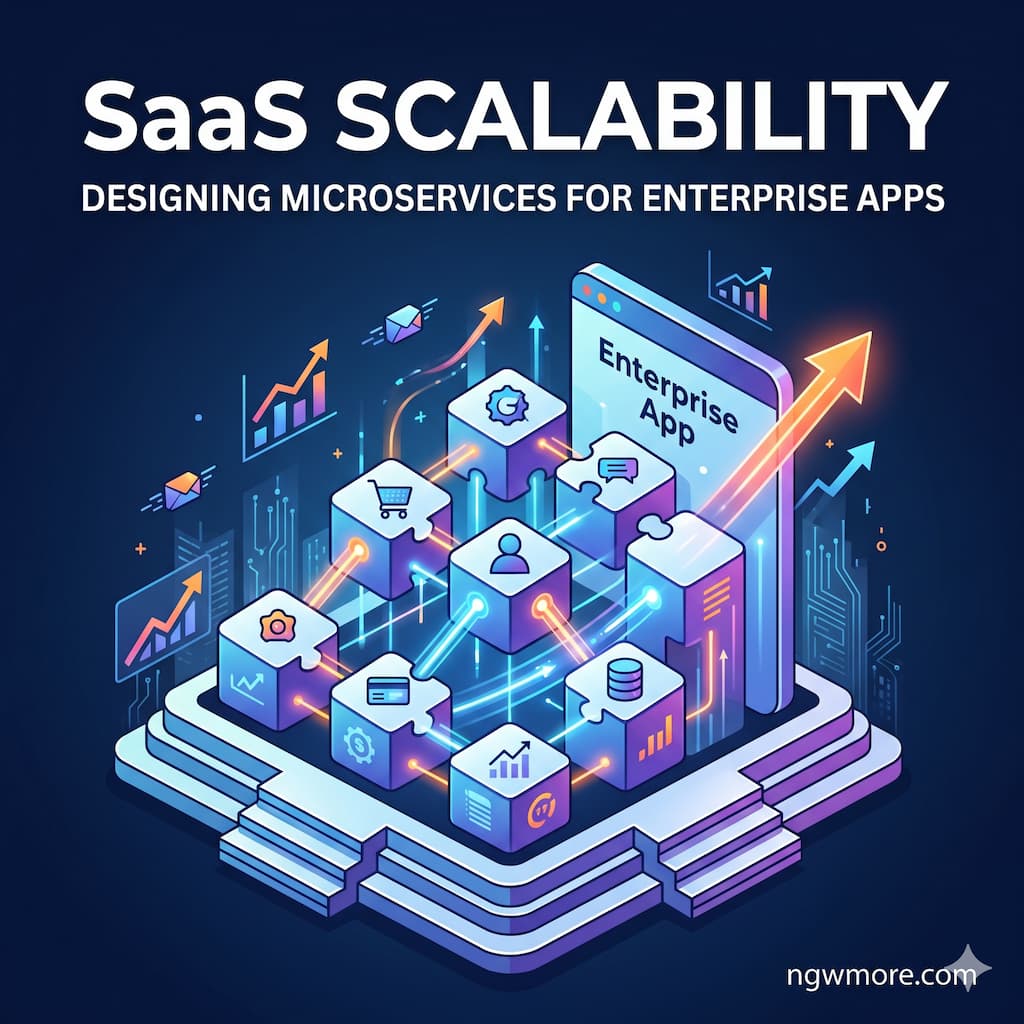
 [Automated Microservices]: Isolated Domain APIs ──> Asynchronous Event Bus ──> Elastic Independent Scaling
- Legacy Monolithic Frameworks: Function within a rigid, synchronous execution loop. Because every business domain shares the same memory space and central data repository, an isolated processing delay in a peripheral reporting module can exhaust the application’s entire web thread pool, cascading into total platform downtime.
- The Automated Microservices Core: Reconfigures this framework entirely. It breaks down the enterprise application into decentralized, decoupled, and autonomous domain-driven services. Each independent microservice manages its own localized data storage layer, communicates via low-latency asynchronous event streams, and scales completely independent of neighboring features based on active computational demand metrics.
By executing automated pattern scanning, multi-dimensional load tracking, and programmatic policy validation right at the service boundary, intelligent microservices networks permanently eliminate operational friction.
The software treasury team moves past its historical role as a passive manual auditor. The underlying software infrastructure evolves into an active strategic armor engineered to predict consumption anomalies, track cost-per-business-metric ratios, and optimize cross-cloud resource configurations weeks before an operational distortion hits the balance sheet.
2. Core Pillars of a Scaled Enterprise Microservices Infrastructure
Constructing an enterprise-grade automated microservices and SaaS scalability platform capable of scaling safely across thousands of multi-jurisdictional cloud regions requires a robust technology layer anchored by four foundational engineering pillars.
Pillar I: Domain-Driven Data Isolation and Distributed Database Topologies
The ultimate operational resilience and database performance precision of any scaled SaaS application depend entirely on completely severing shared backend dependencies across different software functionalities.
Systems architects deploy strict Domain-Driven Design (DDD) protocols to isolate each microservice inside a distinct operational perimeter equipped with its own dedicated database topology (Polyglot Persistence). High-throughput transactional modules utilize performance-optimized relational data stores, real-time analytics engines leverage specialized columnar data lakehouses, and high-velocity caching services operate within in-memory structures. The microservices interface exclusively via secure, version-controlled REST APIs, gRPC channels, or asynchronous message brokers. This data isolation cuts data contention anomalies, permanently prevents cross-domain database deadlocks, and guarantees that a structural schema alteration inside a single service never triggers regression errors across the broader enterprise ecosystem.
Pillar II: Intelligent API Gateways and Asynchronous Event-Driven Messaging
Modern multi-cloud corporate operations require navigating an intricate maze of overlapping department permissions, decentralized network paths, and dynamic traffic routing rules that change dynamically across public cloud zones.
Enterprise technology teams deploy optimized Intelligent API Gateways paired with highly resilient asynchronous event-driven messaging backbones (such as Apache Kafka, RabbitMQ, or AWS EventBridge). The API gateway serves as an unassailable front entrance, orchestrating secure ingress traffic, enforcing rate-limiting limits, managing cross-origin resource sharing (CORS), and executing real-time cryptographic verification loops across all incoming client interactions. Concurrently, the underlying event bus processes millions of asynchronous messages simultaneously, enabling microservices to publish and subscribe to operational updates without experiencing synchronous blocking latencies, maintaining fluid application velocity at all times.
Pillar III: Stochastic Load Simulators and Multi-Variable Capacity Stress Testing
Maintaining an unassailable operational perimeter and ensuring consistent service level agreement (SLA) compliance requires the corporate technology core to continuously evaluate its systemic resilience against sudden, catastrophic shifts in global user requests.
The infrastructure integrates advanced Stochastic Simulation Engines that run millions of continuous, automated traffic-drain and resource-exhaustion stress tests over the prospective multi-tenant cloud matrix concurrently. The system models how application response latencies, database write queue depths, container initialization velocities, and overall cloud budget consumption would perform under severe operational and demand disruptions: an abrupt global consumer traffic spike, an unoptimized application loop deployment that initiates endless recursive API functions, a sudden price adjustment by a primary cloud provider, or a massive expansion of distributed analytical data lakehouse queries. If a simulation reveals that a potential software architecture path risks pushing cloud consumption or application latency above defined thresholds, the platform generates automated optimization alerts, allowing system architectures to adjust structural deployment paths proactively.
Pillar IV: Automated Containerization Orchestration and Self-Healing Lifecycles
Waiting for traditional manual server configuration or lagging human infrastructure adjustments to provision fresh application capacity or replace crashed processes exposes the enterprise to massive, unhedged operational downtime windows during peak traffic spikes.
Operations groups deploy automated Containerization Orchestration Fabrics (such as Kubernetes or managed cloud container meshes) connected directly to live application monitoring telemetry and system health checks. The optimization core tracks resource utilization variables—including memory allocation drift, CPU usage percentages, and network error rates—continuously across all active container deployments.
If an independent microservice container violates a predefined metric threshold or experiences a critical exception error, the self-healing orchestration matrix bypasses manual intervention queues to execute an immediate automated response playbook.
The framework programmatically kills the faulty container, provisions an identical, clean instance from an encrypted registry container map within seconds, and automatically scales out additional worker pods horizontally to manage incoming traffic volume shifts, maintaining absolute system availability and structural continuity.
3. High-Performance Optimization: The SaaS Scalability Ledger
Transitioning an enterprise technology infrastructure from uncoordinated monolithic applications to an automated, scaled corporate microservices architecture fundamentally redefines an organization’s administrative efficiency and structural data resilience metrics.
| Performance Parameter | Legacy Monolithic Software Architectures | Scaled Intelligent Microservices Core |
| Component Scaling Precision | Rigid; requires scaling the entire application globally | Absolute; elastic independent horizontal scaling per service |
| Blast Radius Exposure | High; minor feature errors can crash the entire system | Isolated; contained service errors keep the broader platform running |
| Deployment Lifecycle Velocity | Slow; lengthy monolithic code compilation and testing cycles | Continuous; automated microservice CI/CD independent releases |
| Data Architecture Integrity | Shared monolithic database; high risk of resource deadlocks | Domain-isolated data perimeters; targeted datastore engines |
| Cloud Infrastructure Efficiency | High capital leakage due to constant over-provisioning | Total optimization; automated container auto-scaling loops |
4. Operational Implementations: Microservices in Active Enterprise Spheres
Evaluating how advanced microservices platforms and automated SaaS scalability frameworks perform under complex, real-world corporate engineering scenarios highlights their vital importance in preserving institutional trust and protecting core data assets.
Defusing Systemic Cascading Failures in Hyper-Scale Digital Commerce Environments
Consider a premier international digital commerce and enterprise billing conglomerate that coordinates multi-tenant transaction processing pipelines, real-time merchant settlement clearinghouses, and localized inventory tracking engines serving millions of global consumers daily. The underlying multi-cloud platform processes millions of daily transactions and handles highly sensitive financial records under rigid international compliance directives. During an intense off-hours marketing campaign, a sudden, non-linear spike in global user traffic velocities floods the checkout API, overloading a peripheral product review sorting engine that relies on complex relational database lookups.
Under traditional monolithic software configurations, this sudden database strain quickly exhausts the application’s shared memory pool. The delayed product review queries cause web threads to stack up, blocking incoming payment processing requests and crashing the central enterprise server engine within minutes. By the time the operations department manually isolates and restarts the massive system infrastructure hours later, the organization has experienced substantial transaction losses, significant merchant churn, and immediate balance-sheet margin erosion.
The enterprise completely neutralizes this catastrophic risk by anchoring its core application fabric to an automated microservices architecture. The platform monitors machine behavior telemetry, container resource usage metrics, and inter-service call flows continuously.
The moment the traffic spike hits the product review module, the automated containerization orchestration engine registers the non-linear memory variance instantly.
The platform executes an automated isolation playbook: it programmatically triggers an automated API call to decouple the product review service from the critical payment gateway path, applies a circuit-breaker block to throttle non-essential queries, and spins up additional horizontal container pods specifically for the payment clearing microservice. This sub-second response completely insulates the checkout pipeline from peripheral component failures, keeping core transaction flows running smoothly at peak velocity, saving millions of dollars in transaction revenue, and preserving unassailable operational stability.
Eradicating Configuration Drift and Optimizing Delivery in Enterprise Content Stacks
A hyper-scale digital content platform and media-as-a-service provider manages thousands of automated media processing workflows, real-time image resizing queues, and asset distribution pipelines across multi-tenant public cloud environments to serve business consumers globally. To improve web page loading speeds and optimize user experiences across its media ecosystem, the corporate technology division requires its distributed microservices to continuously execute fast image transformations, content indexing sweeps, and localized asset delivery changes.
The enterprise stabilizes its application performance perimeter and eliminates processing bottlenecks by anchoring its delivery network to an automated cloud infrastructure and policy-as-code management layer. The automated network protection engine monitors active multi-cloud environments continuously, comparing live container configurations against baseline infrastructure definitions.
During an extensive content expansion wave, a software update manually alters a media processing container’s resource limits, creating an unexpected data processing lag that threatens to slow down asset generation across approximately 60 active digital media channels.
The automated protection plane identifies the unauthorized configuration drift instantly as a policy violation and executes an automated remediation playbook: it programmatically overrides the unapproved container settings, resets the deployment microservice back to its optimized policy-as-code blueprint, and scales up transient edge-caching instances to offload processing weights automatically. This real-time defense prevents further system degradation, secures core application response times, and maintains unassailable platform visibility without requiring manual engineering code cleanups.
5. Security Architecture for Hardened Microservices Automation Planes
Centralizing global microservices configurations, integrating live infrastructure-as-code (IaC) deployment pipelines, tracking vulnerability metrics, and automating API-driven resource optimization paths introduces intense data privacy and system security requirements. Because a centralized container orchestration platform commands the absolute administrative authority to modify cloud environments, alter data routing policies, and interface with sensitive microservice logs, the automation control framework represents a top-tier target for advanced persistent threat networks, software supply chain syndicates, and corporate espionage operations.
Implementing Anonymized Telemetry Tokenization across Application Monitoring Pipelines
To train predictive auto-scaling models, evaluate application factor analysis, and execute large-scale lookalike resource usage clustering safely without violating global data privacy directives (such as GDPR or CCPA) or exposing proprietary corporate trade secrets to public network observers, organizations must implement a robust data perimeter.
Systems architects deploy an automated data tokenization proxy directly at the front edge of the application telemetry ingestion pipeline. Before any container log, API response stream, or database transaction record is written to the central predictive data lakehouse, all sensitive personal fields, specific user identifiers, and internal corporate IP addresses are automatically extracted, cryptographically hashed, and replaced with secure tokens. The quantitative models and risk-attribution engines execute their pattern-recognition calculations over completely anonymized operational metadata, maintaining total monitoring utility while ensuring absolute corporate data privacy across all regional entities.
Hardening the Deployment Core via Zero-Trust Isolation and Confidential Enclaves
Because the centralized microservices orchestration core commands the absolute authority to analyze code vulnerabilities, modify routing policies, alter automation thresholds, and execute automated account changes via API links, accessing this administrative engine requires extreme security constraints.
- Zero-Trust Network Access (ZTNA): Isolate the entire microservices management plane, container registries, configuration dashboards, and continuous integration/continuous deployment (CI/CD) pipelines inside a strict Zero-Trust Network Access envelope. Every developer account, system administrator terminal, and internal software integration must undergo continuous multi-factor authentication, rigorous automated behavioral risk screening, and endpoint device posture assessments before gaining access to the platform interface.
- Confidential Computing Enclaves: Critical code compilation steps, container payload builds, and security certificate signing tasks must execute exclusively within hardware-isolated Confidential Computing Enclaves equipped with hardware-level memory encryption. This architectural environment keeps your underlying proprietary software blueprints, microservice configuration logs, and cryptographic access keys completely insulated from host-level interception, internal insider threats, or external data exploitation throughout the execution lifecycle.
6. Regulatory Convergence: Adhering to Global Software and Data Standards
Scaling a comprehensive automated microservices architecture and multi-tenant SaaS scalability platform across international borders requires absolute compliance with an evolving web of international legislative frameworks, corporate governance parameters, and information security standards.
- The AICPA Trust Services Criteria (SOC 2 Type II): Rigorous international information security auditing frameworks demand that high-growth digital organizations, cloud infrastructure networks, and software-as-a-service entities implement and present verifiable operational safety metrics, continuous log tracking pipelines, and automated access governance histories across all active computing environments.
- ISO/IEC 27001 Information Security Management: Renowned international standardization benchmarks require global technology corporations to establish and maintain comprehensive information security management systems (ISMS), mandate strict access isolation controls across distributed microservices domains, and enforce documented asset management procedures across all data processing hubs.
- Global Data Sovereignty Regulations: Hardening regional data isolation acts (such as the European Union’s cloud data protection directives) enforce strict penalties on global enterprise corporations that allow user data telemetry or private transactional metadata to cross national borders without maintaining strict cryptographic compliance controls, forcing microservices architectures to deploy highly localized database clusters operating under strict policy-as-code control models.
Read More⚡ Quantum Hardware: Next Frontiers in Secure Computing standards
Conclusion: Fabricating the Unassailable Application Scale Moat
The integration and scaling of a modern, data-driven microservices architecture and enterprise SaaS scalability framework is not a discretionary luxury for high-growth digital platforms and technology networks; it is a fundamental technological requirement to achieve long-term corporate resilience, application data integrity, and continuous operational uptime. The historical strategy of managing multi-tenant cloud software portfolios through slow, human-centric validation gates and trailing monolithic code deployments—while tolerating severe calculation latencies, configuration drift exposures, and high over-provisioning infrastructure costs—is an unsafe operational approach that invites market displacement, massive system outages, and balance-sheet erosion.
By engineering an integrated, forward-looking software fabric built on high-throughput real-time telemetry ingestion pipelines, domain-isolated database topologies, software-defined policy-as-code micro-segmentation controls, and autonomous self-healing containerization playbooks, progressive enterprise leaders transform their engineering centers from a compliance cost center into a high-performance strategic weapon.
Ultimately, the definitive advantage in the global digital ecosystem belongs entirely to the visionary enterprises that can compile code, optimize systems, and deploy secure application environments as fast as the market moves—mastering advanced microservices infrastructure frameworks to drive secure, highly predictable, and market-leading global scale across any operational horizon.
Deploying computationally intensive microservices orchestration platforms, hosting high-throughput transactional database topologies, processing real-time policy-as-code compliance layers, and managing ultra-secure confidential computing build enclaves requires world-class, zero-downtime server infrastructure. Secure your company’s intelligent SaaS scalability engine on an unassailable infrastructure foundation by exploring the premium enterprise hosting configurations at ngwmore.com.