
Endpoint Detection: Scaling Secure Corporate Networks Trends
The modern enterprise perimeter has completely evaporated. For decades, corporate IT security relied on a well-defined centralized model. Network architects erected powerful hardware firewalls, secure web gateways, and rigid intrusion prevention systems around an organization’s physical offices, creating a trusted local area network (LAN) where employee workstations could be easily monitored and insulated.
However, the rapid acceleration of distributed workforces, multi-cloud computing frameworks, global supply-chain integrations, and the ubiquitous adoption of Bring-Your-Own-Device (BYOD) policies have permanently broken this legacy defensive paradigm.
Today, the endpoint—whether it is a corporate-issued laptop, a remote worker’s personal smartphone, a virtual desktop infrastructure (VDI) instance inside AWS, or an automated industrial Internet of Things (IoT) sensor—is the new perimeter. Adversaries no longer focus their primary efforts on smashing through hardened data center firewalls. Instead, they exploit the perimeter’s fragmentation, launching highly calculated, low-signal campaigns against vulnerable edge devices to gain an initial foothold.
Once an endpoint is compromised, attackers move laterally across the internal corporate fabric, executing advanced persistent threats (APTs), bypassing identity directories, and staging devastating ransomware attacks.
Operating under this decentralized reality using legacy signature-based antivirus software or uncoordinated event loggers introduces severe systemic risks. Point tools lack the real-time visibility and automated capabilities needed to stop modern, zero-day exploits, fileless malware attacks, and living-off-the-land techniques.
To maintain continuous operational resilience, protect proprietary corporate data assets, and comply with strict international regulatory mandates, enterprise technology and security leaders must upgrade their defensive posture. They are systematically scaling and deploying advanced Endpoint Detection and Response (EDR) architectures as a core foundational pillar of their zero-trust corporate networks.
1. The Core Bottleneck: Why Traditional Antivirus Fails at Scale
To architect a scalable endpoint defense, systems engineers must first analyze the structural limitations of legacy security paradigms when applied to modern corporate infrastructure.
- Legacy Antivirus Architecture: Relies almost entirely on signature matching. The software scans local storage drives for known, malicious file hashes that have been pre-cataloged by security researchers. If an attacker modifies a single line of an exploit’s code, its cryptographic hash changes entirely, rendering it completely invisible to signature-based scanners.
- Modern Scaled EDR Architecture: Abandons static file scanning in favor of continuous behavioral monitoring and telemetry analysis. EDR records every micro-action occurring on an endpoint—such as registry modifications, process spawning behaviors, local memory injections, and outbound network connections—evaluating the broader operational context in real time to isolate malicious activity instantly.
2. Definitive Trends Reshaping Scaled Endpoint Security
The landscape of corporate network defense is adapting to clear macro trends, driven by the increasing cleverness of threat groups and the emergence of advanced automated software capabilities.
Trend I: The Rise of Behavioral AI and On-Device Machine Learning
Enterprise networks process trillions of daily data bytes across thousands of distributed endpoints. Attempting to backhaul every single local endpoint event log to a centralized cloud server for analysis introduces severe network latency, excessive bandwidth consumption, and single-point availability dependencies.
To solve this operational scaling bottleneck, modern EDR architectures embed behavioral artificial intelligence and machine learning models directly into lightweight, on-device software agents.
These local AI engines analyze runtime behavior patterns independently of an active internet connection. If an agent detects a native system utility suddenly behaving abnormally—such as PowerShell executing a highly obfuscated base64 command and trying to inject code into a critical system process—the local machine learning model recognizes the behavioral signature of a fileless attack, terminates the process instantly, and shields the endpoint without waiting for a cloud response.
Trend II: Proactive Threat Hunting and Integrated Graph Analytics
Sophisticated state-sponsored APT groups design their attack paths to deliberately fly beneath the radar of traditional security thresholds. They avoid blatant malware deployment, preferring to harvest legitimate administrative credentials and use native, pre-installed operating system tools to compromise the environment.
Modern enterprise networks neutralize this vector by utilizing advanced EDR graph analytics for proactive threat hunting. The EDR data core automatically links isolated endpoint telemetry points across the entire global infrastructure into unified, multi-dimensional entity graphs.
Security teams run continuous automated queries against these data graphs to identify subtle, correlated anomalies—such as an administrative user logging into a critical engineering server at an uncharacteristic hour, executing an uncommon database export command, and immediately initiating an outbound connection to an external storage bucket. By visualizing the entire system-wide attack path simultaneously, threat hunters identify and purge hidden corporate network compromises weeks before a traditional alarm would be triggered.
Trend III: Hyper-Automation and Playbook Orchestration
The baseline velocity of modern automated ransomware attacks means that manual human response speeds are no longer fast enough to protect corporate networks from systemic risk. When a high-velocity encryption script executes on an executive’s laptop, a security analyst taking fifteen minutes to open a ticket and review log files results in total data loss for that machine and adjacent network shares.
Scaled EDR infrastructures counteract this risk by implementing automated incident playbooks through Security Orchestration, Automation, and Response (SOAR) integrations. Security architects program granular, automated isolation rules tailored to specific threat certainty levels.
The moment the EDR agent verifies a high-confidence credential-stuffing attack or an active ransomware encryption loop, it triggers an immediate response without waiting for human confirmation: it isolates the infected workstation from the local network, revokes the user’s active session tokens across the corporate identity provider, and pushes new firewall rules to the global network core—containing the blast radius of the attack in seconds.
3. High-Performance Optimization: The Scaled Endpoint Ledger
Transitioning an enterprise infrastructure fabric away from uncoordinated point security tools to a scaled, automated EDR framework fundamentally redefines an organization’s defensive efficiency.
- Average Detection Latency: Traditional logging systems require hours or days of manual analysis. Scaled EDR drops detection times to sub-seconds via on-device behavioral AI.
- Alert Compression Efficiency: Legacy environments face heavy alert fatigue from uncoordinated warning logs. EDR compresses data inputs up to 12x by clustering alerts into unified incidents.
- Network Bandwidth Footprint: High-overhead log streaming creates bandwidth constraints. EDR architecture utilizes lightweight, intelligent filtering to minimize data backhaul costs.
- Remediation Action Velocity: Manual, multi-department intervention delays containment. EDR utilizes automated, programmatic SOAR playbooks to isolate threats in seconds.
- Data Lineage Visibility: Fragmented local data logs lack context. EDR provides complete, system-wide cryptographic data history across every endpoint node.
4. Real-World Applications: EDR Across Modern Corporate Fabrics
Analyzing how scaled endpoint detection platforms perform under real-world enterprise conditions demonstrates their critical role in safeguarding global business operations.
Defending Cloud Workloads and Containerized Infrastructure
Modern enterprise networks are not limited to physical office hardware; they encompass thousands of dynamic, short-lived cloud containers and microservices running inside hybrid cloud infrastructures. If an attacker exploits a remote-code execution vulnerability within a public-facing cloud application, they can compromise the underlying container image and attempt to breach the hypervisor layer to compromise adjacent cloud nodes.
The enterprise shields its multi-cloud fabric by deploying specialized, cloud-native EDR agents across all active virtual instances and container environments. The EDR platform monitors runtime container processes continuously.
If a microservice container suddenly attempts to access restricted host directories or execute unauthorized binary files, the cloud EDR agent detects the anomalous privilege escalation attempt instantly.
The system kills the compromised container shell immediately and spins up a fresh, uncorrupted microservice instance programmatically, ensuring uninterrupted web app availability while preserving complete forensic logs of the attack vector for the security team.
Protecting Critical Industrial OT and IoT Telemetry Links
For energy conglomerates, automated manufacturing plants, and global logistics operations, corporate networks are tightly linked to Operational Technology (OT) and sprawling IoT edge systems. If an adversary compromises a legacy engineering terminal at a manufacturing facility, they can attempt to inject rogue operational commands into physical Programmable Logic Controllers (PLCs), threatening to trigger massive industrial equipment breakdowns.
The corporation hardens this critical intersection by implementing a specialized OT-focused EDR framework. Because legacy industrial terminals frequently run on older operating software that cannot tolerate heavy security applications, the scaled EDR framework utilizes non-disruptive, ultra-lightweight behavioral passive sensing agents.
The platform continuously audits command-execution patterns, system configuration changes, and communications protocols across the OT-IT interface.
The moment an unauthorized workstation attempts to alter a physical PLC’s firmware parameters, the EDR system blocks the transmission route instantly, flags the terminal as compromised, and safeguards critical physical infrastructure assets from cyber-sabotage.
5. Security Architecture for Scaled Telemetry Ingestion Networks
Because a scaled enterprise EDR framework handles an organization’s ultimate lifeblood—including real-time process logs, system registry configurations, and sensitive employee identity telemetry—the underlying data infrastructure itself represents a premium target for advanced espionage networks and cyber-sabotage syndicates.
- Enforcing Cryptographic Telemetry Integrity: Implement strict Write-Once-Read-Many (WORM) storage parameters and cryptographic log hashing across the database infrastructure. Telemetry must be encrypted in transit using mutual TLS (mTLS) and committed to an append-only repository, preventing adversaries from modifying logs to hide active tracks.
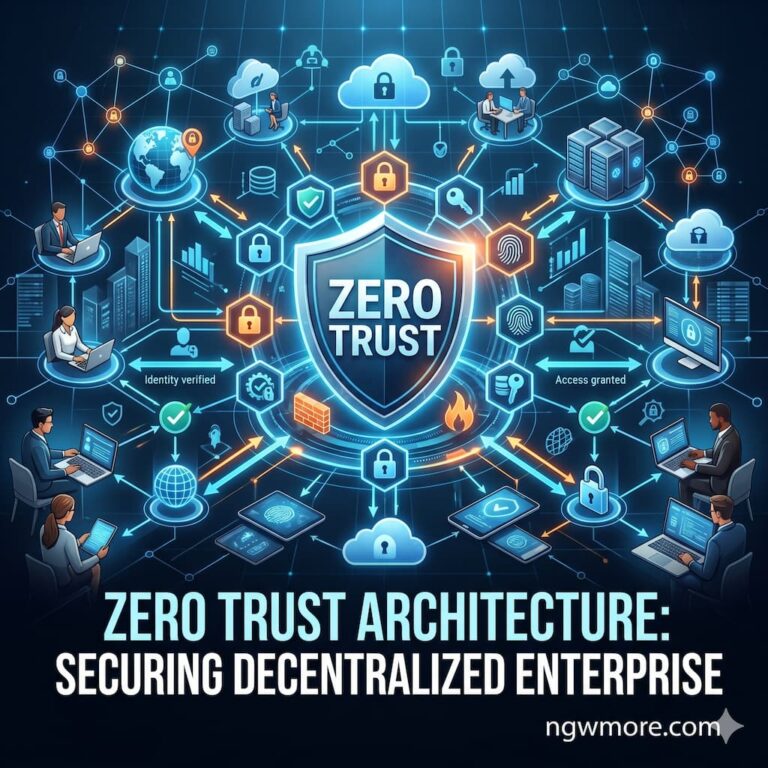
- Core EDR Console Isolation: Isolate the central management hub, deployment workflows, and API connection pipelines inside a comprehensive Zero-Trust Network Access (ZTNA) gate. Mandate continuous user-identity verification, absolute separation of structural duties, and automated device posture screening to immunize the security interface from remote access exploitation.
6. Regulatory Compliance: Meeting Global Data Security Mandates
Scaling a comprehensive EDR architecture is no longer merely an infrastructure best practice; it is a vital legal necessity to maintain corporate compliance with tightening international regulatory frameworks.
- The SEC Cybersecurity Disclosure Rules: Imposing strict guidelines on public organizations, these mandates require companies to maintain reliable, continuous logging frameworks and deploy automated threat discovery mechanisms to ensure material security incidents are reported within a strict four-day window.
- The NIS 2 Directive (European Union): Expanding security mandates across essential infrastructure sectors in Europe, NIS 2 enforces rigorous requirements for end-to-end incident management, continuous endpoint observability, and proactive cross-domain risk management, backed by heavy financial penalties for non-compliance.
- Global Data Localization Directives: Tightening data sovereignty laws across international boundaries require that any user or system telemetry captured from regional endpoints must reside strictly within local physical data jurisdictions, requiring organizations to implement decentralized, multi-region hybrid cloud architectures.
Read More⚡ Algorithmic Supply Chains: Optimizing B2B Inventory Logistics
Conclusion: Engineering the Resilient Corporate Fabric
The deployment and scaling of a modern Endpoint Detection and Response (EDR) architecture is not a discretionary luxury for the enterprise; it is a fundamental technological requirement to survive tomorrow’s high-velocity cyber-threat landscape. The historical strategy of managing corporate networks through static, signature-based antivirus software—while tolerating severe alert fatigue, visible blind spots, and slow, manual incident response cycles—is an unsafe approach that exposes an organization to severe financial, legal, and operational ruin.
By engineering an integrated, automated endpoint defense fabric built on high-performance multi-source telemetry ingestion, on-device behavioral AI engines, hardware-hardened data integrity protections, and autonomous response playbooks, forward-thinking technology and security leaders do far more than just log network activity. They build an incredibly fast, highly resilient, and endlessly scalable engine for corporate cyber resilience.
Ultimately, the competitive advantage in the global digital ecosystem belongs entirely to the agile enterprises that can defend their infrastructure as fast as they process data—mastering advanced EDR telemetry fabrics to drive secure, unassailable global expansion across any operational horizon.
Deploying computationally intensive EDR telemetry lakehouses, high-performance behavioral AI engines, real-time multi-source log aggregators, and low-latency automated response dashboards requires state-of-the-art, zero-downtime server infrastructure. Secure your company’s digital security engine on an unassailable foundation by exploring the premium enterprise hosting configurations at ngwmore.com.