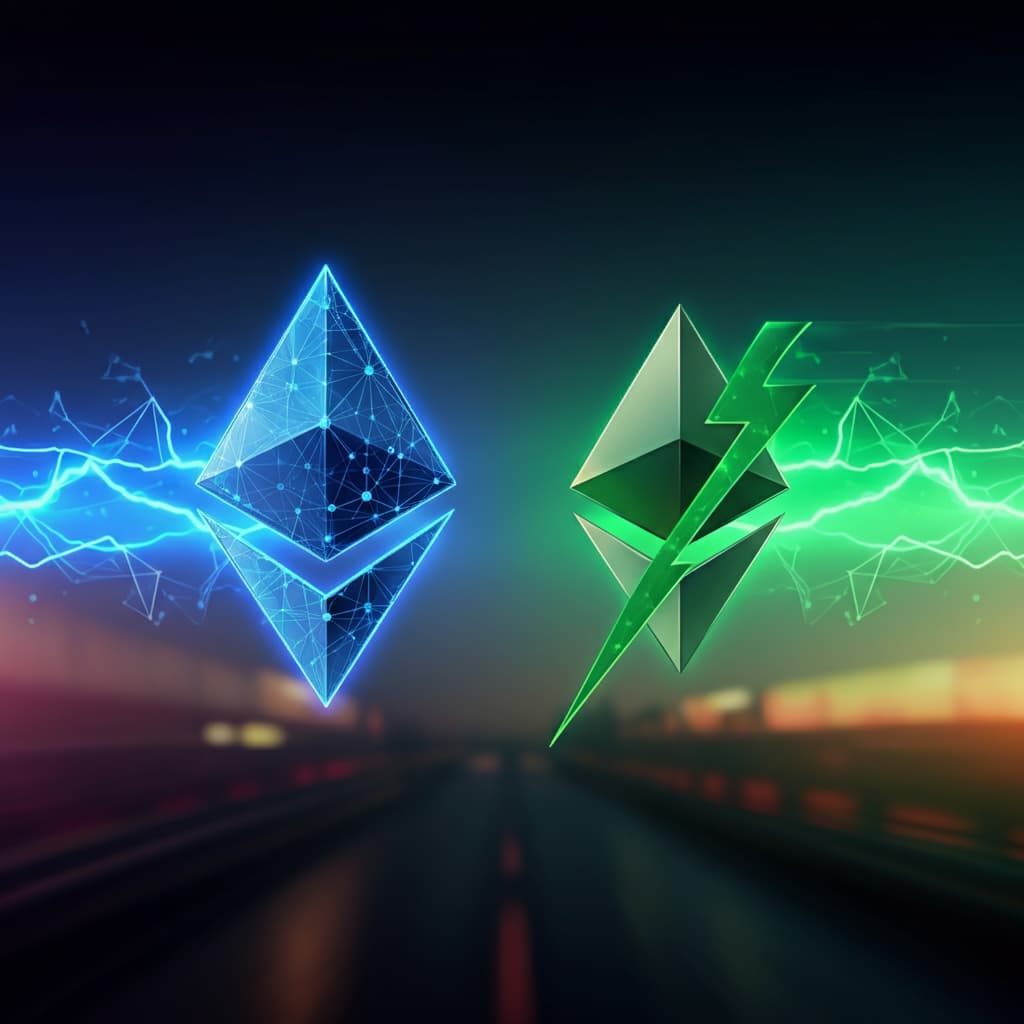
Ethereum vs Solana: Which Will Lead the Next Bull Run?
The cryptocurrency market has always been a battlefield for dominance, with projects continuously vying for the top spot. Ethereum and Solana stand out as two blockchain giants, capturing the attention of investors, developers, and crypto enthusiasts alike. But the lingering question remains—which one is poised to lead the next bull run?
This article evaluates Ethereum and Solana, exploring their key features, differences, and potential to shape the future of decentralized finance (DeFi), non-fungible tokens (NFTs), and beyond. Whether you’re a seasoned crypto investor or just starting, this comparison will guide you through the unique strengths and weaknesses of both networks.
What Defines Ethereum and Solana?
Before we jump into the specifics, it’s important to understand what sets Ethereum (ETH) and Solana (SOL) apart. Both are layer-1 blockchain platforms and competitors in the cryptocurrency ecosystem, but they have distinct approaches to scalability, transaction speed, adoption, and features.
Ethereum
Launched in 2015, Ethereum introduced the world to smart contracts. Beyond being a digital currency, Ethereum serves as a decentralized platform where developers build decentralized applications (dApps) and services powered by self-executing code. Ethereum’s ecosystem has laid the foundation for revolutions in DeFi, NFTs, and decentralized autonomous organizations (DAOs).
Key highlights:
- Security and Decentralization: Ethereum’s proof-of-stake (PoS) consensus mechanism, implemented after the Ethereum Merge in 2022, prioritizes decentralization and network stability.
- Largest DeFi Ecosystem: Ethereum boasts the most extensive network of dApps, holding the majority of DeFi and NFT market share.
- Scalability Challenges: Historically, Ethereum has been plagued by high transaction fees (gas fees) and limited throughput. Layer-2 solutions like Arbitrum and Optimism aim to address these issues.
Native cryptocurrency:
Ether (ETH): The second-largest cryptocurrency by market capitalization, ETH is essential for gas fees and network participation.
Solana
Born in 2020, Solana is often labeled an “Ethereum killer” due to its high throughput and low fees. Solana takes a different technical approach by employing a mechanism called Proof of History (PoH), combined with Proof of Stake (PoS), to achieve high-speed processing without sacrificing security.
Key highlights:
- Blazing Speed: Solana can process 65,000 transactions per second (TPS), a significant leap compared to Ethereum’s current 15–30 TPS.
- Low Costs: With transaction fees averaging less than $0.01, Solana appeals to developers and users seeking cost efficiency.
- Developer-Friendly: Solana’s architecture simplifies onboarding for new projects and offers robust tooling for developers.
Native cryptocurrency:
Solana (SOL): Used for transaction fees, staking, and participating in the network’s governance.
Comparing Ethereum and Solana
Now that you have a foundation for understanding Ethereum and Solana, let’s break down their differences across critical areas.
Scalability
Ethereum:
Ethereum’s historical bottleneck comes from its limited scalability, meaning fewer transactions get processed simultaneously, leading to higher gas fees during peak times. However, Ethereum 2.0 and its PoS upgrade aim to address these issues by reducing energy consumption and paving the way for sharding (a scalability solution expected in the near future).
Solana:
Solana’s architecture is designed for high scalability. By utilizing Proof of History, it ensures faster transaction validations. Solana’s network throughput far surpasses Ethereum’s current capacity, making it an obvious choice for projects requiring high-speed interactions like gaming or real-time DeFi applications.
Winner: Solana, but Ethereum is catching up with future upgrades.
Ecosystem and Adoption
Ethereum:
Ethereum leads the blockchain ecosystem with its robust adoption by developers and enterprises. It boasts over 4,000 dApps and powers leading DeFi platforms like Uniswap and Aave. Its dominance in the NFT space is unparalleled, with marketplaces like OpenSea and major NFT projects running on Ethereum.
Solana:
Solana’s ecosystem is rapidly maturing. Platforms like SolSea and Magic Eden have emerged as competitors to Ethereum’s NFT marketplaces. Additionally, Solana-based projects like Serum and Raydium have gained traction in the DeFi landscape. However, Ethereum still maintains a broader adoption rate.
Winner: Ethereum, due to its established lead.
Security and Decentralization
Ethereum:
Ethereum prioritizes decentralization, with thousands of validators securing the network. This ensures resilience against attacks and a more stable ecosystem, even as transaction speeds sometimes lag behind.
Solana:
While faster, Solana’s network has faced criticism for outages and downtime, raising concerns about its decentralization and reliability. Its reliance on fewer validators compared to Ethereum makes it more vulnerable to centralization risks.
Winner: Ethereum, for stronger security and decentralization.
Transaction Fees
Ethereum:
High gas fees have been Ethereum’s Achilles’ heel for years. During times of network congestion, fees can skyrocket, making smaller transactions uneconomical.
Solana:
With fees averaging just fractions of a cent, Solana is an attractive option for dApps and users seeking cost efficiency.
Winner: Solana, thanks to its affordability.
Development and Future Prospects
Ethereum:
Ethereum’s roadmap includes sharding, which will multiply its transaction capacity significantly. Additionally, its well-established developer community and network effect give it staying power in the long run.
Solana:
Solana’s promise lies in its innovation and ability to deliver high throughput at minimal costs. However, its road ahead is challenged by criticisms of centralization and competition from other Ethereum layer-2 solutions.
Winner: Ethereum, for a more defined and credible long-term outlook.
Which Blockchain Will Lead the Next Bull Run?
Identifying the next leader in the crypto bull run involves analyzing not just past performance but also future potential. Here’s what might influence the trajectory of Ethereum and Solana.
Why Ethereum Could Lead
- A dominant DeFi and NFT ecosystem secures Ethereum’s position as the go-to blockchain for developers and investors.
- Future upgrades promise sustainable scalability, bridging the current gap in performance.
- Increasing institutional interest and adoption by enterprises add to Ethereum’s credibility.
Why Solana Could Lead
- Solana’s high-speed and low-cost transactions make it attractive for industries dependent on micropayments, such as gaming and social networks.
- Rapid ecosystem growth indicates that Solana is gaining on its competitors.
- Innovations like Proof of History differentiate Solana from other blockchains.
However, it’s worth noting that the crypto market is unpredictable, and competition doesn’t exist in a binary. Ethereum and Solana may serve different purposes, excelling in complementary areas.
Read More⚡ 6 Hilarious Crypto Stories That Defined 2024
A Call to Action for Crypto Enthusiasts
Whether Ethereum or Solana rises to lead the next bull run, one thing is certain—we’re entering an era where blockchain technology is pivotal to the digital economy. Understanding these platforms equips you to make informed decisions and enjoy the opportunities the crypto space offers.
Keep in mind that the best way to stay informed is to explore blockchain platforms, understand their technologies, and experiment with dApps to gain firsthand knowledge.