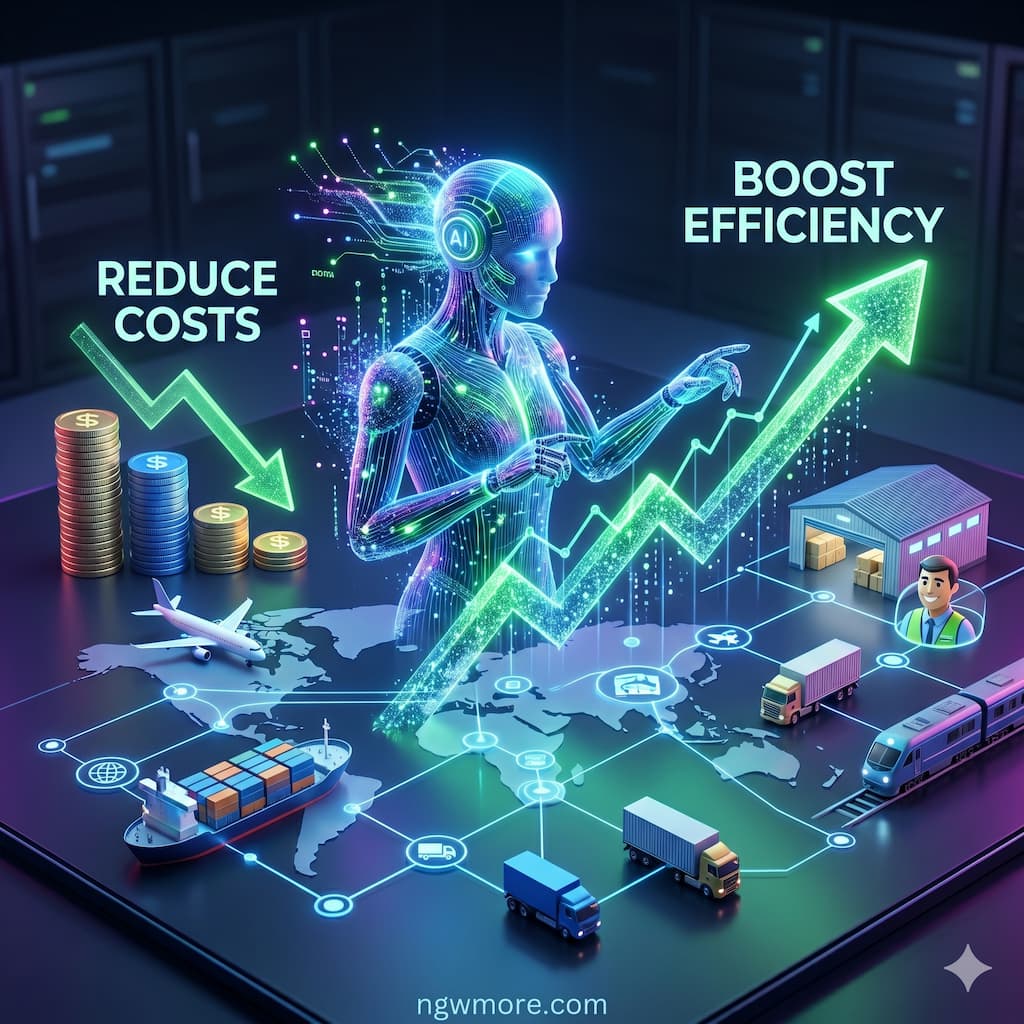
AI in Supply Chain: Reduce Costs & Boost Efficiency
The global supply chain is no longer a linear sequence of events; it has evolved into a hyper-complex, interconnected web of data, logistics, and unpredictable variables. For digital entrepreneurs and enterprise operators—especially those scaling brands via platforms like TikTok Shop or managing complex e-commerce portfolios across domains like ngwmore.com—supply chain management is often the thin line between exponential growth and catastrophic failure.
In 2026, the competitive advantage has shifted from those who have the best products to those who have the most intelligent supply chains. Artificial Intelligence (AI) has moved beyond the realm of theoretical experimentation and is now the primary engine for cost reduction and operational efficiency. By leveraging predictive analytics, autonomous logistics, and algorithmic inventory management, businesses can finally move from a reactive “just-in-case” model to a proactive, AI-driven “just-in-time” architecture.
This comprehensive guide dissects the transformative role of AI in modern supply chain management, offering actionable insights for digital operators to harden their infrastructure, slash overhead, and maximize throughput.
1. Predictive Demand Forecasting: Ending the Guesswork
The most significant drain on any supply chain’s profitability is the “bullwhip effect”—where small fluctuations in consumer demand lead to massive, inefficient swings in inventory levels further up the chain. Traditional forecasting relies on historical sales data, which is inherently backward-looking and fails to account for the velocity of the modern digital market.
Real-Time Trend Ingestion
Market trends can shift in hours due to a viral video or a sudden shift in influencer sentiment. AI-driven forecasting engines utilize Natural Language Processing (NLP) to ingest unstructured data from social media, news feeds, and weather patterns. By correlating these external variables with internal sales metrics, AI can predict demand spikes before they happen.
Dynamic Inventory Optimization
AI doesn’t just predict that people will buy; it predicts where and when. Using machine learning models, businesses can optimize stock levels at the “edge”—positioning inventory in regional fulfillment centers closer to the end consumer. This reduces shipping times and drastically cuts last-mile delivery costs, which are typically the most expensive part of the logistics cycle.
2. Algorithmic Procurement and Supplier Management
Procurement is traditionally a manual, relationship-based process prone to human error and lack of transparency. AI transforms procurement into a data-driven discipline that prioritizes resilience and cost-efficiency.
Intelligent Sourcing
AI platforms can scan global databases of suppliers in real-time, evaluating them based on performance history, financial stability, and geopolitical risk. For a digital operator sourcing high-tech components or specialized textiles, AI can automatically identify alternative suppliers the moment a primary source experiences a production delay or a price hike.
Automated Negotiation and Contract Analysis
Large Language Models (LLMs) are now capable of analyzing thousands of supplier contracts to identify hidden fees, unfavorable terms, or opportunities for bulk discounts that a human procurement officer might overlook. Furthermore, AI agents can handle initial negotiations for commodity goods, utilizing game theory and market data to secure the best possible pricing at scale.
3. Warehouse Automation: The Robotic Core
The warehouse is the physical heartbeat of the supply chain. AI-driven automation is turning these spaces into high-speed, error-free environments where every square inch is optimized for maximum vCPM (Value per Cubic Meter).
AI-Powered Sorting and Picking
Computer vision systems integrated with robotic arms can now identify, sort, and pick items with 99.9% accuracy—far exceeding human capabilities. These systems can work 24/7 without fatigue, which is critical for maintaining delivery promises during high-volume periods like Black Friday or New Year’s Eve sales.
Digital Twins for Warehouse Layout
Before moving a single shelf, infrastructure architects can create a “Digital Twin” of their warehouse. AI simulations can test thousands of different floor plans and picking routes to find the most efficient layout. By reducing the physical distance a robot or worker must travel to fulfill an order, businesses can shave seconds off every pick, resulting in thousands of hours saved over a fiscal year.
4. Route Optimization and Autonomous Logistics
Logistics costs are heavily tied to fuel consumption, driver hours, and vehicle maintenance. AI is the ultimate tool for optimizing the “physics” of moving goods from point A to point B.
Dynamic Routing Engines
Unlike legacy GPS systems, AI-driven route optimization accounts for real-time variables such as traffic congestion, port delays, and even bridge heights or weight limits. By optimizing the sequence of deliveries, AI can reduce total mileage by up to 20%, directly impacting the bottom line through lower fuel costs and reduced vehicle wear and tear.
The Rise of Autonomous “Middle-Mile” Delivery
While last-mile delivery remains a challenge for full automation, the “middle-mile”—transporting goods between distribution centers—is being revolutionized by autonomous trucking and drone technology. AI-controlled convoys can operate at optimal speeds for fuel efficiency and can travel through the night, significantly increasing the velocity of the entire supply chain.
5. Security and Transparency: The Blockchain-AI Hybrid
In an era of global complexity, knowing exactly where your product is—and ensuring its authenticity—is a major security concern.
End-to-End Traceability
By combining AI with Distributed Ledger Technology (DLT), businesses can create an immutable record of every touchpoint in the supply chain. AI sensors (IoT) can monitor the temperature of sensitive goods (like perfumes or electronics) during transit. If a threshold is crossed, the AI can instantly trigger an alert, preventing the sale of damaged goods and automating insurance claims through smart contracts.
Predictive Maintenance of Logistics Assets
For operators managing their own fleets or high-end automotive detailing equipment, AI can predict when a machine is likely to fail. By analyzing vibration patterns and thermal data, the AI can schedule maintenance before a breakdown occurs, preventing costly downtime and ensuring that the delivery engine never stops.
6. The Infrastructure Imperative: Hardening the Tech Stack
The most sophisticated AI supply chain model will fail if the underlying digital infrastructure is weak. At https://www.google.com/search?q=ngwmore.com, we emphasize that your digital tools are only as good as the servers they run on.
API Orchestration and Latency
AI supply chain tools rely on thousands of API calls to external logistics providers (like DHL, FedEx, or Mercado Pago). For these automations to fire correctly, your server must have zero-trust security and high-speed network resolution. Managing your environment via a robust panel like aaPanel on a high-performance VPS ensures that your webhooks never time out and your data remains synchronized across all nodes.
Data Silos vs. Unified Data Lakes
The greatest enemy of AI is fragmented data. If your sales data lives in WooCommerce, your shipping data in a separate portal, and your supplier data in an Excel sheet, the AI cannot see the “big picture.” Successful operators are building “Data Lakes”—unified repositories where all supply chain data is cleaned and centralized, allowing the AI to draw deeper, more accurate correlations.
Read More⚡ Building Custom Business Apps Without a Developer
Conclusion: The Lean, Intelligent Supply Chain
The integration of AI into the supply chain is not an “all-or-nothing” proposition. It is an iterative process of identifying bottlenecks and deploying targeted algorithmic solutions.
- Start with Forecasting: Reduce your capital tied up in unsold inventory.
- Automate Sourcing: Protect yourself against geopolitical and market volatility.
- Optimize Logistics: Cut the fat from your shipping and fulfillment costs.
- Harden Infrastructure: Ensure your servers are fast enough to handle the real-time velocity of AI.
By embracing the “Sovereign Infrastructure” mindset and treating your supply chain as a programmable asset, you transform a cost center into a competitive engine. The future of global trade belongs to the lean, the agile, and the intelligent.
To stay at the absolute forefront of digital infrastructure, e-commerce scaling, and AI-driven business strategies, continue your journey here at ngwmore.com.