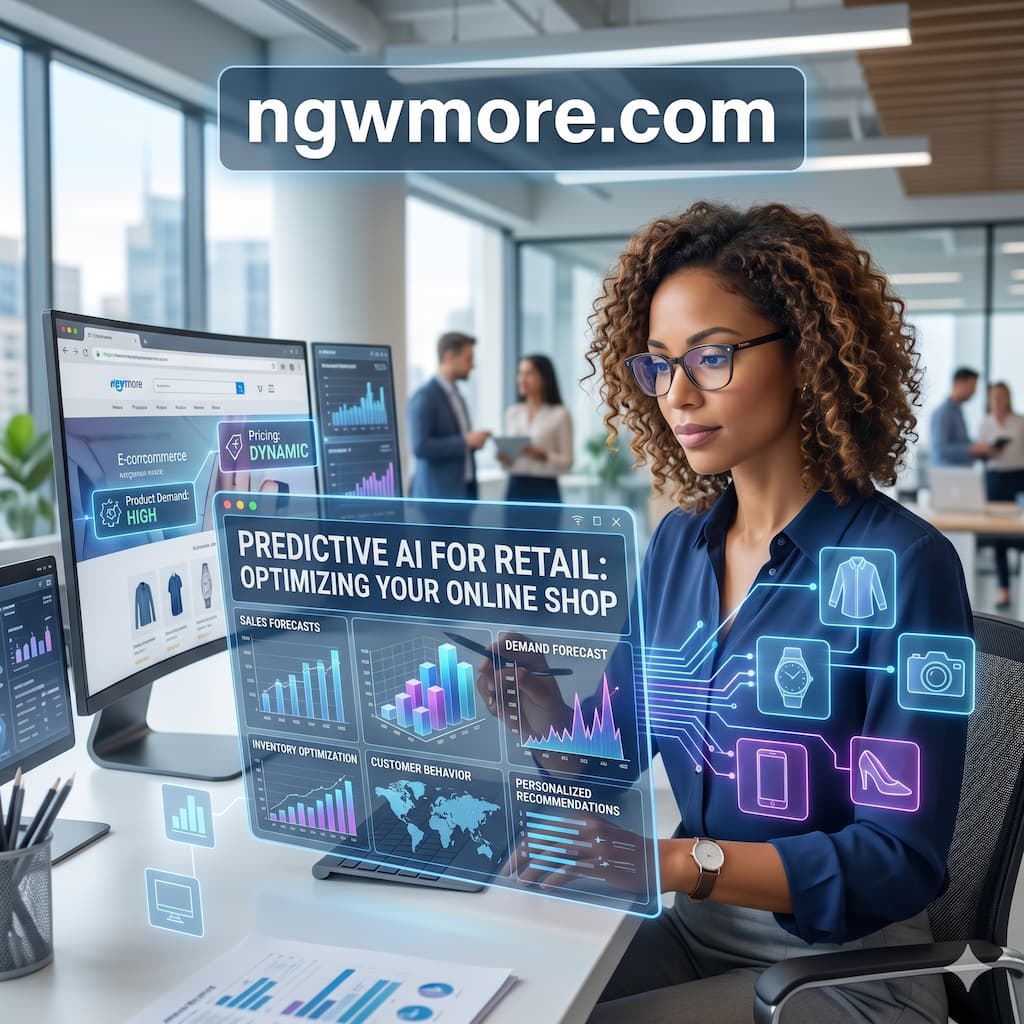
Predictive AI for Retail: Optimizing Your Online Shop
The retail landscape has evolved from simple transactional exchanges to complex, data-driven experiences. In 2026, the difference between a struggling e-commerce store and a market leader often comes down to one thing: the ability to anticipate customer needs before they are even articulated. This is the domain of Predictive AI.
For digital entrepreneurs and shop owners, Predictive AI is no longer a futuristic concept reserved for giants like Amazon or Alibaba. It is a practical, accessible set of tools that can optimize every facet of an online shop, from inventory management to personalized marketing. In this deep dive, we explore how you can leverage Predictive AI to transform your retail operations and maximize your Return on Ad Spend (ROAS).
Understanding Predictive AI in the Retail Context
Predictive AI uses historical data, machine learning algorithms, and statistical modeling to identify the likelihood of future outcomes. In retail, this means moving away from “reactive” management (reacting to a stockout or a drop in sales) toward “proactive” optimization.
By analyzing patterns in past purchases, website traffic, seasonal trends, and even social media sentiment, Predictive AI builds a roadmap for your business’s future performance.
1. Anticipatory Inventory Management
One of the most significant “profit killers” in e-commerce is the imbalance of stock. Overstocking ties up your capital in stagnant products, while understocking (out-of-stock scenarios) leads to lost revenue and frustrated customers.
- Demand Forecasting: AI models analyze years of sales data alongside external variables like local holidays, weather patterns, and economic shifts. This allows you to order exactly what you need, exactly when you need it.
- Safety Stock Optimization: Instead of using a flat percentage for safety stock, Predictive AI calculates the precise buffer needed for each SKU based on its specific volatility and lead time from suppliers.
- Markdown Optimization: If the AI predicts that a specific product line is unlikely to sell at full price before the end of the season, it can suggest incremental markdowns early on to clear inventory while maintaining the highest possible margin.
2. Hyper-Personalization: The End of General Marketing
In the age of information overload, generic “one-size-fits-all” newsletters and ads are increasingly ignored. Predictive AI allows for “Segment of One” marketing.
Predictive Product Recommendations
Standard “customers also bought” widgets are based on broad associations. Predictive AI goes deeper, analyzing a specific user’s clickstream data, time spent on pages, and past purchase frequency to predict what they are most likely to buy next.
Churn Prediction and Prevention
It is far cheaper to retain an existing customer than to acquire a new one. Predictive models can identify patterns that signal a customer is about to leave (e.g., a decrease in login frequency or a change in support ticket sentiment).
- The Proactive Fix: Once a “high-risk” customer is identified, the system can automatically trigger a personalized offer, such as a “We Miss You” discount or a curated lookbook, to re-engage them before they churn.
3. Dynamic Pricing Strategies
In a competitive digital market, prices shouldn’t be static. Predictive AI enables Dynamic Pricing, which adjusts your prices in real-time based on a variety of data points.
- Competitor Monitoring: Automatically adjust your prices relative to your competitors’ stock levels and pricing.
- Price Elasticity Modeling: The AI determines how sensitive your customers are to price changes for specific items. For some products, a 5% increase might not affect volume but significantly boosts profit; for others, a 2% drop could trigger a massive surge in sales.
- Conversion Optimization: If the AI detects a high-intent user who has visited a product page three times without purchasing, it might offer a one-time “exit-intent” price adjustment to close the sale.
4. Enhancing the Customer Journey with Generative and Predictive AI
While Generative AI creates the content, Predictive AI decides when and to whom that content should be shown.
- Optimized Send Times: Don’t send your marketing emails at 9:00 AM just because that’s the industry standard. Predictive AI analyzes when each individual subscriber is most likely to open their inbox and schedules the delivery accordingly.
- Predictive Visual Merchandising: For shops with large catalogs, AI can rearrange the homepage layout for every visitor. A user who frequently buys cycling gear will see the latest mountain bikes, while a user interested in tech will see the newest smartphone accessories.
5. Logistics and Post-Purchase Optimization
The retail experience doesn’t end at the “Checkout” button. Predictive AI ensures the “last mile” of the journey is as efficient as the first.
- Delivery Estimates: Provide hyper-accurate delivery windows by analyzing real-time courier data, traffic, and warehouse processing speeds. This builds trust and reduces “Where is my order?” (WISMO) inquiries.
- Returns Prediction: AI can identify items with high return probabilities based on customer history or product reviews. This allows you to adjust descriptions or even offer a virtual fitting tool to mitigate the return before it happens.
Implementing Predictive AI: A Step-by-Step Guide
For a shop like those hosted on ngwmore.com, you don’t need a PhD in Data Science to start.
- Data Cleanliness: AI is only as good as the data you feed it. Ensure your Google Analytics, pixel tracking, and CRM data are accurate and integrated.
- Start Small: Focus on one high-impact area, such as email personalization or demand forecasting.
- Choose the Right Stack: Tools like Klaviyo (for predictive email), Pecan AI (for general retail predictions), or specialized Shopify/WooCommerce plugins can bridge the gap between raw data and actionable insights.
- Monitor and Iterate: AI models require “training.” Monitor the predictions against actual results and refine your parameters monthly.
Read More⚡ Automating E-commerce: AI Tools for Dropshipping
Conclusion: The Competitive Edge
Predictive AI is shifting from a luxury to a necessity. By understanding your customers’ future behavior, you can eliminate waste in your supply chain, increase the relevance of your marketing, and ultimately drive higher profitability.
For the modern online shop owner, the goal is clear: stop guessing and start predicting. The tools are here; the data is yours. It’s time to optimize.
Summary of Predictive AI Benefits
| Feature | Impact on Business | ROI Driver |
| Demand Forecasting | Reduced overstock/stockouts | Cash Flow Optimization |
| Churn Prediction | Higher customer retention | Lower Acquisition Costs |
| Dynamic Pricing | Competitive positioning | Margin Maximization |
| Product Recs | Increased Average Order Value | Higher Conversion Rate |
Final Thought: At ngwmore.com, we believe in the power of technology to level the playing field. Predictive AI is the great equalizer, allowing small shops to compete with global titans by being smarter, faster, and more personal.