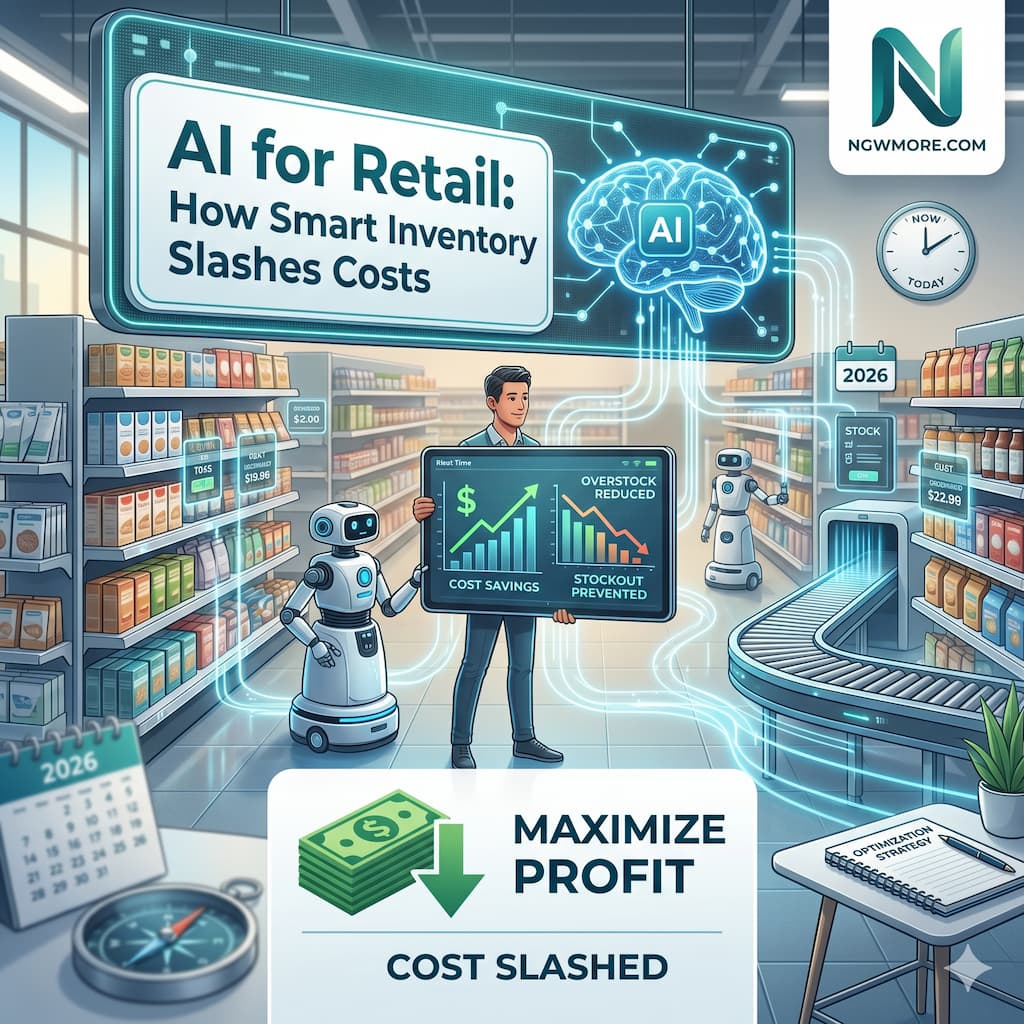
AI for Retail: How Smart Inventory Slashes Costs
In the volatile world of modern commerce, inventory is a double-edged sword. On one side, it represents the potential for revenue; on the other, it is a massive capital sinkhole. Traditionally, retailers have relied on “gut feeling,” historical averages, and manual spreadsheets to manage their stock. But in 2026, those methods are no longer just inefficient—they are a liability.
The integration of Artificial Intelligence (AI) in retail has transformed inventory management from a reactive logistical task into a predictive strategic powerhouse. For the forward-thinking readers of ngwmore.com, understanding how AI slashes costs isn’t just about technical curiosity; it’s about survival in an era of razor-thin margins and instant consumer gratification.
1. The High Cost of the “Old Way”
To appreciate the solution, we must first quantify the problem. Retailers lose billions annually due to two primary inventory failures:
- Overstocking: Excess inventory ties up cash flow, occupies expensive warehouse space, and often leads to heavy discounting or “dead stock” that must be liquidated at a loss.
- Out-of-Stocks (OOS): When a customer can’t find what they need, you don’t just lose a sale; you lose brand loyalty. In the age of 24-hour delivery, a stockout is an invitation for your customer to visit a competitor.
AI addresses these imbalances by replacing human guesswork with Smart Inventory systems that see patterns invisible to the naked eye.
2. Predictive Demand Forecasting: The Heart of Smart Inventory
The most significant cost-saving feature of AI is its ability to predict what will sell, where, and when. Traditional forecasting looks at last year’s sales and adds a percentage for growth. AI, however, uses Multi-Variable Analysis.
Beyond Internal Data
AI models don’t just look at your sales history. They ingest external data points:
- Hyper-Local Weather Patterns: Predicting a surge in umbrella sales three days before the storm hits.
- Social Media Trends: Detecting a viral TikTok trend that will spike demand for a specific beauty product in a specific zip code.
- Economic Indicators: Adjusting inventory levels based on real-time shifts in consumer purchasing power or inflation rates.
By accurately predicting demand, retailers can maintain Just-In-Time (JIT) inventory levels, drastically reducing the amount of capital locked in boxes on a shelf.
3. Dynamic Redistribution: Moving Goods Before They Stall
One of the greatest inefficiencies in retail is having too much stock in one location and none in another. Traditionally, moving stock between stores was a manual, slow process.
The AI Logistics Orchestrator
AI systems monitor inventory levels across an entire network in real-time. If a specific sneaker model is languishing in a downtown boutique but flying off the shelves in a suburban mall, the AI automatically triggers a redistribution order.
This Dynamic Rebalancing ensures that stock is always positioned where the “velocity of sale” is highest. This slashes the cost of markdowns because you are moving products to where they can be sold at full price, rather than discounting them to clear space in a stagnant location.
4. Automation in the Warehouse: Slashing Operational Overhead
Smart inventory extends beyond the software and into the physical world of robotics and computer vision.
Computer Vision for Real-Time Audits
Manual stock-taking is notorious for human error. AI-powered cameras and drones can now perform “perpetual inventory” audits. By scanning shelves 24/7, these systems identify displaced items, mislabeled products, and low-stock situations instantly.
- Shrinkage Reduction: AI can identify patterns of theft or administrative error (shrinkage) much faster than traditional audits, allowing for immediate corrective action.
- Labor Efficiency: By automating the tedious task of counting, retail staff can be redirected toward high-value tasks like customer service and sales, optimizing labor costs.
5. Intelligent Procurement and Supplier Management
AI doesn’t just manage what you have; it manages how you get it. Automated Procurement systems use AI to negotiate and execute orders without human intervention.
- Lead-Time Optimization: AI tracks the performance of every supplier. If a specific manufacturer is consistently two days late, the AI adjusts the ordering window to ensure the delay doesn’t result in an out-of-stock event.
- Bulk-Buy Intelligence: AI can identify the “sweet spot” for bulk purchasing—calculating if the discount offered by a supplier outweighs the increased holding costs of the extra inventory.
6. Personalization as an Inventory Tool
It may sound counterintuitive, but personalized marketing is a powerful inventory management tool.
Driving Sales to Excess Stock
If an AI identifies that a retailer has a surplus of blue denim jackets, it can automatically trigger targeted ad campaigns or personalized email offers to customers who have previously shown an interest in blue denim or similar styles. Instead of a store-wide “30% Off” sale that kills margins, the AI uses Micro-Discounts or targeted incentives to move the specific stock that needs to go, preserving the margin on the rest of the inventory.
7. Sustainability and the “Green” Bottom Line
In 2026, waste is not just an environmental issue; it’s a financial one. Regulations and consumer pressure are making “dead stock” and landfilling more expensive.
AI slashes costs by promoting a Circular Inventory Model:
- Waste Reduction: Especially in grocery and fashion, AI minimizes perishability and seasonal waste.
- Returns Management: AI analyzes return patterns to identify products with high defect rates or sizing issues, allowing retailers to pull these items from the inventory stream before they incur more return-shipping costs.
8. Building the AI-Ready Retail Tech Stack
For the readers of ngwmore.com looking to implement these changes, where do you start? The transition to smart inventory requires three core components:
- Unified Data Lake: You cannot have smart inventory if your online sales data and in-store sales data live in separate silos. AI needs a “Single Source of Truth.”
- Cloud-Integrated ERP: Systems like aaPanel or specialized retail ERPs must be able to communicate with AI APIs in real-time.
- Edge Computing: Using sensors and cameras at the “edge” (the physical store) allows for immediate data processing without waiting for cloud latency.
9. The Human Element: The Role of the “Algorithmic Merchant”
Does AI replace the retail buyer? No. It evolves the role. The “Merchant of the Future” at brands like SuperAchado uses AI as an advisor. While the AI handles the millions of daily micro-calculations (reordering socks, moving t-shirts), the human merchant focuses on:
- Brand Curation: Selecting the “next big thing” that has no historical data for AI to analyze.
- Creative Strategy: Designing the store experience that AI-driven logistics supports.
- Ethical Oversight: Ensuring the AI’s pricing and procurement strategies align with company values.
Read More⚡ Predictive Analytics: Using AI to Forecast Sales Growth
Conclusion: The Competitive Advantage of Efficiency
The retail landscape is no longer about who has the most stock; it’s about who has the smartest stock. AI for retail has moved from a “nice-to-have” luxury to the foundational engine of profitable commerce.
By slashing the costs associated with overstocking, stockouts, and manual labor, smart inventory allows retailers to reinvest those savings into better customer experiences and faster growth. On ngwmore.com, we advocate for the aggressive adoption of these tools. In the battle for the consumer’s wallet, the most efficient supply chain wins.
The question for your business in 2026 is no longer if you will use AI, but how much money you are willing to lose until you do.